Bryan Elite Concrete takes on concrete resurfacing in Bryan, TX and has worked with overlays and toppings for more than 20 years, serving surrounding cities including Lake Bryan, College Station, Hearne, Caldwell and Gause. Resurfacing puts a new wearing surface on a slab you keep, which makes the condition of what is already there the whole question.
An overlay is bonded to the concrete beneath it and inherits everything that concrete does. If the slab moves, the overlay cracks with it. If the top layer is delaminating, the new surface debonds at the same plane. None of that is a fault in the product, and all of it is predictable before anyone quotes.
So we test the substrate before pricing rather than after. Where the slab is sound, resurfacing is one of the best-value things you can do to a tired driveway, pool deck or shop floor. Where it is not, we would rather tell you that now than sell an overlay that fails inside a year.
What Resurfacing Can and Cannot Fix
The Condition the Slab Has to Be In
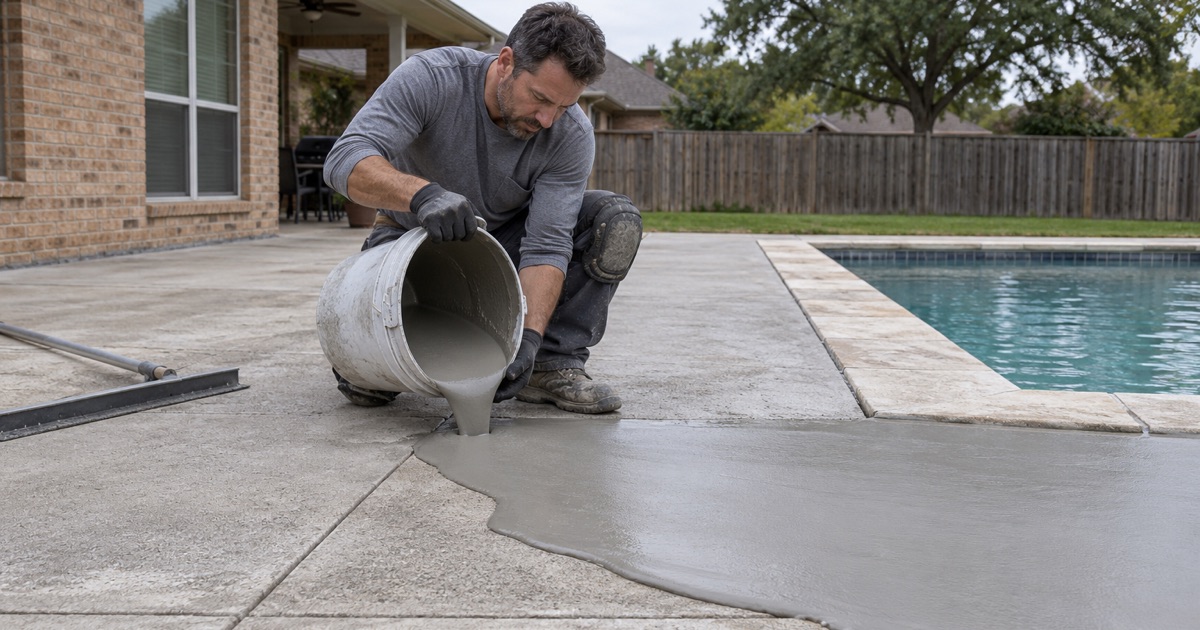
A candidate slab has continuous support underneath, cracks that are stable rather than seasonally working, and a surface layer solidly attached to the concrete below it. Surface wear, discoloration, light spalling, old stain and a dated finish are all fixable. Rocking panels, a sunken bay or a slab broken through in several places are not, whatever the surface looks like.
When Repair or Replacement Is the Honest Answer
Where a slab has lost its base, leveling comes first and resurfacing afterward, in that order. Where panels are broken through or the grade itself is wrong, replacement is the cheaper route once the second attempt is counted. We price the alternatives side by side rather than pushing the option that suits our schedule.
Testing the Substrate Before Quoting
We sound the slab for hollow areas, check the surface for delamination, look at how cracks behave and assess how much moisture is moving through the slab from below. Only then do we quote a system. That inspection costs an hour and prevents the single most expensive mistake in this part of the trade.
Overlay Systems and What Each One Suits
Thin Bonded Overlays and Microtoppings
A thin bonded overlay or microtopping restores a smooth, uniform surface at a fraction of replacement cost and works well on interior floors, covered patios and commercial entries. It is a cosmetic and wearing layer rather than a structural one. Because it is thin, substrate preparation and bond are everything, and the finished appearance follows the flatness of what is beneath.
Stamped and Textured Overlays
A stamped overlay adds pattern and color to an existing slab, which is how a plain gray patio or pool deck gets a decorative surface without demolition. The same rules about scale, color and heat apply as on a new stamped pour, and lighter colors stay far more comfortable underfoot in summer. Joints in the original slab still have to be honored through the new surface.
Spray-Down and Knockdown Textures
Spray-applied textures give grip and a fresh, uniform look on pool decks and walkways where the priority is a surface that stays safe when wet. They build up less thickness than a stamped overlay, so they suit areas with door thresholds or fixed edges that cannot rise. Color is integral to the system rather than a stain applied afterward.
Preparation Is Most of the Job
Grinding, Shot Blasting and Surface Profile
Every overlay system specifies a surface profile it needs to bond to, and getting there means mechanical preparation: grinding, shot blasting or scarifying to remove laitance, old sealer, coatings and contamination. Pressure washing alone does not create profile. This stage is the majority of the labor on a resurfacing job and the one that decides whether it lasts.
Crack Treatment and Honoring Joints
Existing cracks are routed and treated so they are not simply covered over, and every control joint and expansion joint in the original slab is carried through the new surface. A joint that gets bridged will reappear as a crack in the overlay within the first season, in exactly the same line, which is why honoring joints is not optional.
Bond Coats and Placement Conditions
A bond coat is applied and the overlay placed within the window that coat allows, at temperatures and humidity the system is rated for. Summer here shortens those windows considerably, which affects when in the day we place and how much crew is on site. Working outside the manufacturer’s conditions is how a properly specified system still fails.
Where Resurfacing Works Best
Pool Decks and Patios
Pool decks are the strongest case: the concrete is usually sound, the appearance has aged, and replacement would mean disturbing coping and tile. A textured overlay restores appearance and improves wet grip in one pass. We specify texture and color around bare feet on a hot, wet surface rather than around how it photographs.
Garage and Shop Floors
An old shop or garage floor that is worn, stained and dusting but structurally fine is a good candidate for a bonded overlay or a topping, provided moisture from below is checked first. Slabs poured without a vapor retarder can push moisture up through the new surface. We test for that before recommending a system rather than after it blisters.
Commercial Entries and Walkways
On commercial property, resurfacing is often the only option that fits the operating hours, because the area can be prepared, placed and back in service faster than removal and replacement allows. We stage the work by section so the entrance stays usable, and we specify slip resistance for surfaces that get wet or take heavy foot traffic.
- 20+ Years Experience
- Free On-Site Quotes
- Written Scope and Specs